
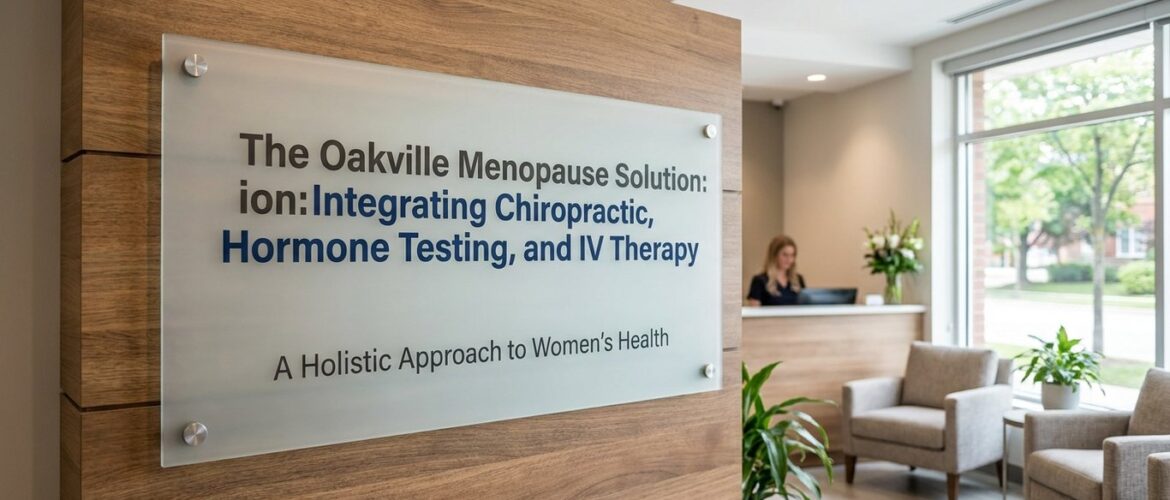
Menopause and perimenopause are deeply personal experiences. No two women go through them exactly the same way. Some deal with relentless hot flashes and sleepless nights. Others notice mood shifts, joint stiffness, or a kind of bone-deep fatigue that no amount of coffee seems to fix. These changes are real, and they deserve real attention. An integrated care model in Oakville may bring together clinical assessment, lifestyle support, chiropractic care, targeted laboratory testing, and IV therapy where medically appropriate – all working toward one shared goal: helping you feel better and function well during this stage of life.
This article is here to give you a clear, honest picture of what each service can and cannot do, how they might work together, and what questions you should be asking before you commit to any treatment. It will also point out when a visit to your family doctor or specialist is the right move. Every treatment decision should be personalized and guided by qualified healthcare professionals who know your full health history. Think of this as your starting point for a smarter, more informed conversation about your care.
What Is Menopause and When Should Women Seek Support?
Menopause is officially defined as twelve consecutive months without a menstrual period, typically occurring in the late forties to early fifties. The years leading up to that point – perimenopause – can involve irregular periods, shorter or longer cycles, and a wide range of symptoms. After the twelve-month mark, a woman is considered postmenopausal. The symptoms associated with these stages fall into several categories: vasomotor symptoms like hot flashes and night sweats, genitourinary changes like dryness and urinary urgency, psychological effects like anxiety and mood shifts, sleep disruption, musculoskeletal issues like joint pain and stiffness, and metabolic changes that affect bone density, weight distribution, and cardiovascular risk. Understanding which category your symptoms fall into helps guide the right kind of support.
Here’s the thing – not every symptom you experience during midlife is caused by hormones. Thyroid disorders, anemia, medication side effects, sleep apnea, depression, anxiety, and other medical conditions can produce symptoms that look almost identical to menopause. Fatigue, weight changes, brain fog, and mood shifts are not exclusive to hormonal transitions. That’s exactly why a thorough health history and physical assessment matter so much. Jumping straight to hormone-focused treatments without ruling out other causes is a shortcut that can lead you in the wrong direction.
Some symptoms should not be managed with wellness services alone – they need prompt medical attention. Postmenopausal bleeding, even a single episode, requires evaluation. The same goes for chest pain, severe or unusual headaches, unexplained weight loss, neurological symptoms like numbness or vision changes, and any symptoms that are significantly disrupting your daily life. These are red flags that need a physician’s assessment, not a supplement or an infusion. Knowing when to escalate your care is just as important as knowing what services might help along the way.
Why an Integrated Oakville Menopause Care Model May Help
Managing menopause well often means looking at the whole picture rather than treating one symptom at a time. A coordinated care model connects symptom assessment, movement and musculoskeletal support, nutrition, sleep, stress management, conventional medical treatment, and follow-up into one coherent plan. Instead of seeing a chiropractor for your back pain, a naturopath for fatigue, and your family doctor for hot flashes – all without those providers knowing what the others are doing – an integrated approach means everyone is working from the same page. That kind of coordination reduces the risk of conflicting advice, unnecessary testing, or treatments that cancel each other out.
A reputable clinic offering integrated menopause care should be transparent and patient-centred from the start. That means obtaining informed consent before any treatment, providing clear pricing upfront, making appropriate referrals when something falls outside the clinic’s scope, offering evidence-informed recommendations rather than trendy promises, documenting your medical history properly, and monitoring both the benefits and potential risks of any treatment you receive. If a clinic skips these steps or makes you feel pressured, that’s a signal worth paying attention to.
Chiropractic Care for Menopause-Related Musculoskeletal Symptoms
A chiropractor’s assessment goes beyond simply looking at your spine. They may evaluate your posture, spinal and joint mobility, muscle tension, movement patterns, workplace ergonomics, and activity-related pain. During midlife, many women notice increased back pain, neck discomfort, morning stiffness, and a general sense that their body doesn’t move as freely as it used to. Hormonal changes can affect connective tissue and joint health, but lifestyle factors, posture habits, and reduced activity also play a significant role. A thorough musculoskeletal assessment helps identify what’s actually driving your discomfort so the right approach can be taken.
Conservative chiropractic interventions may include exercise guidance, mobility work, manual therapy, ergonomic education, progressive strengthening, and advice about returning to activity safely. It’s worth being clear about what this does and doesn’t include: chiropractic care is not a treatment for menopause itself, and it does not balance hormones or reverse the hormonal changes that come with this life stage. What it can do is help you move better, reduce pain, and support your physical function – which matters a great deal when you’re trying to stay active and maintain muscle and bone health during midlife.
Before beginning chiropractic care, full disclosure of your health history is essential. Conditions like osteoporosis, previous fractures, cancer, inflammatory joint disease, neurological symptoms, anticoagulant use, and prior surgeries all affect what techniques are safe and appropriate. A responsible chiropractor will ask about these things and will refer you to a physician, physiotherapist, or specialist when your presentation calls for it. If your pain is severe, worsening, or accompanied by symptoms like bladder changes, leg weakness, or unexplained swelling, that’s a referral situation – not a chiropractic adjustment situation.
“Menopause is defined as the permanent cessation of menstrual periods.” -Mayo Clinic Health System
How Chiropractic Care Fits With Medical Menopause Treatment
Chiropractic care and medical menopause treatment are not competing options – they can address different goals at the same time. A chiropractor may focus on your movement, posture, and pain-related concerns, while your physician or menopause clinician evaluates vasomotor symptoms like hot flashes, genitourinary changes, bone health, cardiovascular risk, and whether hormone therapy is appropriate for you. These are distinct areas of care, and having both addressed by qualified providers is a reasonable approach for many women.
Good coordination between providers means more than just knowing each other exists. It involves sharing symptom goals, disclosing all medications and supplements, communicating about changes in your condition, tracking outcomes over time, and making referrals promptly when pain is persistent, progressive, or comes with warning signs. If your back pain isn’t improving after a reasonable course of chiropractic care, or if new symptoms appear, the next step should be clearly defined rather than left up to you to figure out on your own.
Hormone Testing: What It Can and Cannot Tell You
For most women aged 45 or older who have typical menopause symptoms and changes in their menstrual cycle, a clinical diagnosis can be made based on age, symptoms, and menstrual history alone. Hormone levels – particularly estrogen and FSH – fluctuate significantly during the perimenopause transition, which means a single blood test taken on one particular day may not give you a reliable picture of what’s happening overall. Testing at the wrong moment can lead to results that look normal even when symptoms are very real, or results that look abnormal without being clinically meaningful.
That said, targeted testing can be genuinely useful in specific situations. If your symptoms are atypical, occur unusually early, or could point to thyroid disease, anemia, pregnancy, premature ovarian insufficiency, or medication effects, selective laboratory testing helps clarify the picture. The key word is selective. Testing should be chosen by a qualified clinician based on your specific situation – not ordered as a broad automatic panel just because you walked through the door. More tests don’t always mean better answers; sometimes they create more confusion than clarity.
It’s also worth addressing some of the testing options that get a lot of marketing attention but less clinical support. Saliva hormone testing, large “hormone balance” panels, and tests advertised as being able to identify every possible cause of fatigue or weight gain have significant limitations. Saliva testing is not well standardized, and broad panels often generate results that are difficult to interpret meaningfully. Any test result needs to be understood in the context of your symptoms, medical history, medications, menstrual status, and the quality of the laboratory performing the analysis. A number on a page is only as useful as the clinical reasoning behind it.
Which Tests Might Be Considered During a Menopause Assessment?
Testing during a menopause assessment should be individualized, not automatic. Depending on your symptoms and health history, a clinician might consider thyroid-stimulating hormone to check thyroid function, a complete blood count and ferritin to evaluate for anemia, glucose or lipid testing to assess metabolic health, liver and kidney markers if certain treatments are being considered, or a pregnancy test when relevant. These tests help evaluate possible contributors to your symptoms and give a general picture of your health – they don’t automatically determine what hormone prescription you should receive.
Follicle-stimulating hormone testing may be considered in specific circumstances, such as when symptoms appear unusually early, when the diagnosis is genuinely uncertain, or when premature ovarian insufficiency is suspected. In women under 40 with possible ovarian insufficiency, testing becomes more clinically important. However, even in these cases, results need to be interpreted by a clinician who understands the full context – a single elevated FSH doesn’t tell the whole story on its own.
“Hormone testing isn’t recommended before starting hormone therapy for menopausal symptoms.” -American College of Obstetricians and Gynecologists
Hormone Therapy, Bioidentical Products, and Safety Questions
For women with significant vasomotor symptoms like hot flashes and night sweats, prescription menopausal hormone therapy can be an effective and appropriate option – but it’s not right for everyone. The decision involves a careful look at your age, how long it has been since menopause, personal and family medical history, cardiovascular risk factors, breast and endometrial cancer history or risk, history of blood clots, liver health, and whether you have a uterus. These factors shape both the type of therapy and the form it comes in. This is not a one-size-fits-all decision, and it should never be made without a thorough medical evaluation.
The term “bioidentical” gets used a lot in wellness marketing, and it’s worth understanding what it actually means. Bioidentical refers to the molecular structure of a hormone – it means the hormone has the same chemical structure as the one your body produces. Some regulated prescription products are bioidentical. Compounded hormone preparations are also often marketed this way, but compounded products are not subject to the same regulatory oversight as approved prescription medications, which means their potency, purity, and consistency can vary. “Bioidentical” does not automatically mean safer, more effective, or individually tested through extensive clinical evidence.
Starting hormone therapy is not a one-time decision – it requires ongoing follow-up. That means reviewing how your symptoms are responding, watching for side effects, monitoring any changes in bleeding patterns, checking blood pressure, keeping up with preventive screening, and reassessing your risk factors over time. It’s also important to be clear about what hormone therapy is not: it is not a general anti-aging treatment, and it should not be promoted as a way to prevent chronic disease in the general population. The goal is symptom relief and quality of life, guided by an individualized risk-benefit conversation with your clinician.
IV Therapy During Menopause: Potential Uses and Limitations
IV therapy involves delivering fluids, vitamins, minerals, or other substances directly into the bloodstream through a vein. Some clinics market infusions for fatigue, hydration, immune support, or general wellness during menopause. The appeal is understandable – when you’re exhausted and struggling, the idea of a fast, direct nutrient boost sounds attractive. But the evidence for IV therapy varies considerably depending on the ingredient, the dose, and the individual patient. Some ingredients have established uses in clinical medicine; others are being offered in wellness settings with much less scientific backing.
IV therapy is not a replacement for diagnosis. If your fatigue is caused by anemia, thyroid disease, depression, sleep apnea, or diabetes, an infusion won’t fix it. If your energy is low because of poor nutrition or disrupted sleep, an IV drip is a workaround, not a solution. Whenever possible, there should be a documented deficiency or a clear clinical reason before IV therapy is recommended. Administering nutrients intravenously when there’s no evidence of a deficiency bypasses the body’s normal regulatory systems and doesn’t necessarily produce better results than addressing the underlying issue directly.
Like any medical procedure, IV therapy carries risks that patients deserve to know about. These include infection at the injection site, bruising, vein irritation, allergic reactions, fluid overload, electrolyte imbalances, interactions with medications, and in more serious cases, complications involving the kidneys or heart. Before agreeing to any infusion, you should be able to get clear answers about where the products come from, what ingredients and doses are being used, who will administer the infusion, what the emergency protocol is if a reaction occurs, and how benefits and side effects will be tracked afterward.
When IV Therapy May Be Inappropriate
IV therapy is not suitable for everyone, and certain health conditions make it particularly risky. People with kidney disease may not be able to handle the fluid or electrolyte load. Those with heart failure or uncontrolled high blood pressure face risks from additional fluid volume. Pregnancy, significant allergies, complex medication regimens, and a history of adverse reactions to infusions are all reasons to approach IV therapy with serious caution – or avoid it entirely. These aren’t minor considerations; they’re situations where the risks can outweigh any potential benefit.
“Tests most often aren’t needed to diagnose menopause.” -Mayo Clinic
Before agreeing to IV therapy, it’s reasonable – and smart – to ask a series of direct questions. What is the medical indication for this infusion? What specific ingredients and doses are being used, and why? Is there laboratory evidence showing a deficiency that this will address? Who will administer the infusion, and what are their qualifications? What happens if I have a reaction during or after the infusion? And how will we evaluate whether it’s working or causing harm? If a clinic can’t or won’t answer these questions clearly, that’s important information.
Nutrition, Exercise, Sleep, and Stress Management in the Oakville Plan
What you eat during midlife genuinely matters for your health, even if no single food or diet will eliminate menopause symptoms entirely. Adequate protein supports muscle mass, which tends to decline with age. Calcium and vitamin D are important for bone health. Fiber supports digestive and cardiovascular health. Staying well hydrated, eating balanced meals, and moderating alcohol intake all contribute to how you feel day to day. These are foundational habits – not magic fixes – and they work best when they’re consistent rather than dramatic and short-lived.
Exercise is one of the most well-supported tools for healthy aging, and it becomes even more important during and after menopause. Resistance training helps preserve muscle mass and bone density. Weight-bearing activity supports bone health. Aerobic exercise benefits the heart and mood. Balance and mobility work reduce fall risk. The right program for you will depend on your current fitness level, any injuries or pain you’re managing, and whether you have conditions like osteoporosis that require modifications. Starting gradually and progressing thoughtfully is far more sustainable than going all-in and burning out – or getting hurt.
Sleep disruption is one of the most commonly reported menopause complaints, and it has real consequences for mood, energy, concentration, and overall health. Establishing consistent sleep routines, managing nighttime hot flashes with appropriate clothing and bedroom temperature, and using evidence-based stress-reduction strategies like mindfulness or structured relaxation can all help. Cognitive behavioural therapy for insomnia is one of the most effective approaches for persistent sleep problems. That said, if insomnia, anxiety, or depression is significantly affecting your life, it warrants a clinical evaluation rather than just lifestyle adjustments.
Bone, Heart, Metabolic, and Sexual Health Screening
Menopause care that focuses only on hormone levels misses a big part of the picture. The years around menopause are an important time to take stock of cardiovascular risk. That means looking at blood pressure, cholesterol, blood glucose, smoking status, alcohol use, family history, physical activity level, and body weight – not just estrogen. Estrogen’s protective effects on the cardiovascular system change after menopause, which is one reason heart disease risk increases for women in this life stage. Addressing these modifiable risk factors is a meaningful part of long-term health.
Bone health deserves its own conversation. Estrogen plays a role in maintaining bone density, and its decline during menopause accelerates bone loss. Risk factors for osteoporosis include family history, low body weight, smoking, high alcohol intake, certain medications, and low calcium or vitamin D intake. Weight-bearing exercise and adequate nutrition are important protective factors. Bone-density testing may be considered based on your age and risk profile. One thing worth being clear about: chiropractic spinal manipulation is not a substitute for osteoporosis assessment or fracture prevention, and in the presence of significant bone loss, certain manual techniques may need to be modified or avoided.
Sexual and genitourinary health is another area that often goes undiscussed but significantly affects quality of life. Vaginal dryness, discomfort during sex, urinary urgency or frequency, changes in libido, and body-image concerns are all common during and after menopause. The good news is that there are effective options. These may include over-the-counter lubricants and vaginal moisturizers, pelvic-floor physiotherapy, prescription topical treatments, systemic hormone therapy in appropriate cases, counseling, or referral to a specialist depending on the cause. These concerns are worth raising with your care team – they’re not something you simply have to accept.
“This therapy most often is used to treat common menopause symptoms, such as hot flashes and vaginal discomfort.” -Mayo Clinic
How to Choose a Menopause Clinic in Oakville
Choosing a clinic is one of the most important decisions in this process, and it’s worth doing some homework. Look for licensed professionals with menopause-specific training or experience. Confirm that physician access is available when needed, either within the clinic or through a clear referral pathway. The clinic should have a defined scope of practice and be transparent about what it can and cannot treat. Individualized assessment – not a one-size-fits-all package – should be the standard. Evidence-informed recommendations and collaboration with your primary care provider are signs of a clinic that takes your health seriously.
Pay close attention to how a clinic talks about its services. Claims about “hormone balancing,” detoxification, or treatments that promise to resolve every symptom should raise questions. Guaranteed results aren’t something any ethical clinic can offer. Be cautious of mandatory large testing packages that don’t seem tailored to your situation, pressure to purchase supplements, or the suggestion that a single therapy can address every symptom you have. Menopause is complex, and honest care reflects that complexity rather than oversimplifying it.
Practical logistics matter too. Ask about appointment availability and wait times. Find out what laboratory fees look like and whether they’re included in consultation costs. Understand the pricing for treatments like IV therapy or chiropractic sessions before you commit. Ask about cancellation policies, how often follow-up is expected, how to reach someone if you have a concern between appointments, how your records are managed, and how the clinic communicates with your family doctor. These details affect whether the care you receive is actually coordinated and sustainable.
What to Expect at an Integrated Menopause Consultation
A thorough intake appointment covers a lot of ground – and that’s a good thing. Expect to discuss your symptom timeline, menstrual and reproductive history, current medications and supplements, existing medical conditions, family history, lifestyle habits, sleep quality, mental health, pain or mobility concerns, sexual health, and what you’re most hoping to address. The more complete a picture your care team has, the more targeted and appropriate your plan can be. Coming prepared with notes or a symptom diary makes this process much easier.
The assessment itself will likely include vital signs, a relevant physical examination, and a review of your preventive screening history – things like mammograms, Pap tests, and colorectal screening. Laboratory or imaging referrals may be made when they’re clinically justified, not as a routine package. The goal of this stage is to understand what’s driving your symptoms and what the safest, most effective starting points are for your specific situation. Not every concern needs an intervention right away; some things are best monitored first.
Follow-up is where good care really proves itself. After your initial assessment, you should have measurable goals, a clear starting plan, and a timeline for reassessment. Treatments should begin at the lowest appropriate level of intervention, with monitoring for both improvement and adverse effects. If something isn’t working, the plan should be adjusted. If your symptoms exceed what the clinic can safely manage – whether that’s a complex medication interaction, a red-flag symptom, or a condition requiring specialist input – referral should happen promptly and without hesitation.
Costs, Coverage, and Preparing for an Oakville Appointment
The costs associated with integrated menopause care can add up quickly if you’re not paying attention. Consultations, chiropractic visits, laboratory tests, IV infusions, supplements, imaging, and prescription treatments may each carry separate fees, and coverage varies significantly depending on your insurance or employee benefit plan. Before booking anything, ask for an itemized estimate of likely costs. Confirm what your plan covers and what you’ll be paying out of pocket. Being surprised by a large bill after the fact is stressful – and it’s avoidable with a bit of upfront communication.
Walking into your first appointment prepared makes a real difference. Bring a complete list of your current medications and supplements, including doses. A symptom diary – even a few weeks of notes on what you’re experiencing, when, and how severely – is genuinely helpful. Bring any previous laboratory results or imaging reports that are relevant. Write down your family history, particularly for heart disease, osteoporosis, and cancer. And perhaps most importantly, come with a short list of your top two or three priorities. Knowing what matters most to you helps your care team focus where it counts.
Common Mistakes to Avoid With Menopause Wellness Programs
One of the most common mistakes in menopause wellness is treating symptoms without first ruling out other causes. Fatigue, weight gain, mood changes, and brain fog can all stem from thyroid disease, anemia, sleep disorders, or depression – none of which are solved by hormone adjustments or IV infusions. Repeating hormone tests frequently without a clinical reason adds cost and confusion without improving care. Relying on unregulated compounded hormone products without physician oversight introduces real quality and safety risks. And receiving spinal manipulation without disclosing conditions like osteoporosis or neurological symptoms can be genuinely dangerous.
On the self-management side, stopping prescribed medications abruptly – whether that’s antidepressants, blood pressure medication, or hormone therapy – without talking to your doctor first can have serious consequences. Combining multiple supplements without a review of interactions is another common risk that gets underestimated. The word “natural” does not mean safe, and some herbal products interact with medications or have their own side effects. Shared decision-making with qualified providers, and appropriate medical follow-up, are the safeguards that keep wellness programs from doing more harm than good.
FAQ: The Oakville Menopause Solution
Do I need hormone testing to confirm menopause?
For most women aged 45 or older with typical symptoms and changes in their menstrual cycle, menopause can be assessed based on clinical history alone – no blood test required. Targeted hormone testing may be considered when symptoms appear unusually early, are atypical, or suggest another condition such as thyroid disease or premature ovarian insufficiency. In those cases, testing helps clarify the picture, but it should be ordered selectively by a clinician rather than automatically.
Can chiropractic care balance my hormones?
Chiropractic care is a valuable tool for supporting mobility, managing musculoskeletal pain, and improving physical function – but it does not directly regulate ovarian hormone production or replace medical evaluation for menopause. Claims that spinal adjustments can balance hormones are not supported by clinical evidence. Chiropractic care works best as one part of a coordinated plan, not as a standalone solution for hormonal changes.
Does IV therapy treat hot flashes, fatigue, or menopause?
IV therapy is not a recognized treatment for menopause or its core symptoms. While it may have a role in specific clinical situations – such as correcting a documented nutrient deficiency – it should not be used as a general fix for fatigue or hot flashes without a clear medical indication. Before considering IV therapy, it’s important to explore better-supported options, review your full medical history, and understand the risks and ingredients involved.
Is bioidentical hormone therapy safer than standard hormone therapy?
The term “bioidentical” refers to the molecular structure of a hormone and does not automatically make a product safer, more effective, or better studied than regulated prescription options. Some approved prescription hormone therapies are bioidentical; compounded products marketed under this label are not subject to the same regulatory standards. The safety and appropriateness of any hormone therapy depends on your individual health history, risk factors, and a thorough conversation with a qualified clinician – not on the marketing language used to describe it.
What should I do about bleeding after menopause?
Any bleeding that occurs after menopause – even a single, seemingly minor episode – needs to be medically evaluated. Postmenopausal bleeding can have a range of causes, some of which require prompt investigation and treatment. This is not a symptom to manage with wellness services or wait out on your own. Contact your physician and get it assessed.
Conclusion: Building a Personalized Oakville Menopause Plan
The most important takeaways from this article are straightforward: menopause care should start with an accurate health history and appropriate medical assessment, not a treatment package. Chiropractic care can genuinely support musculoskeletal comfort and movement, but it isn’t a hormonal treatment. Hormone testing should be selective, clinically guided, and properly interpreted – not ordered as a routine panel for every patient. And IV therapy should never be used as a substitute for diagnosis or evidence-based treatment. When these services are offered within a coordinated, transparent, patient-centred framework, they can complement each other meaningfully. When they’re offered in isolation or with inflated claims, they fall short of what you deserve.
If you’re ready to take a more informed, integrated approach to your menopause care, we encourage you to schedule an assessment for The Oakville Menopause Solution: Integrating Chiropractic, Hormone Testing, and IV Therapy. Bring your symptom history, your medication and supplement list, any previous lab results, and your questions. Most importantly, come with a clear sense of your top priorities – because the best care plans are built around what matters most to you. Our team is committed to creating a safe, coordinated plan with clear goals, transparent costs, appropriate referrals, and regular follow-up every step of the way.